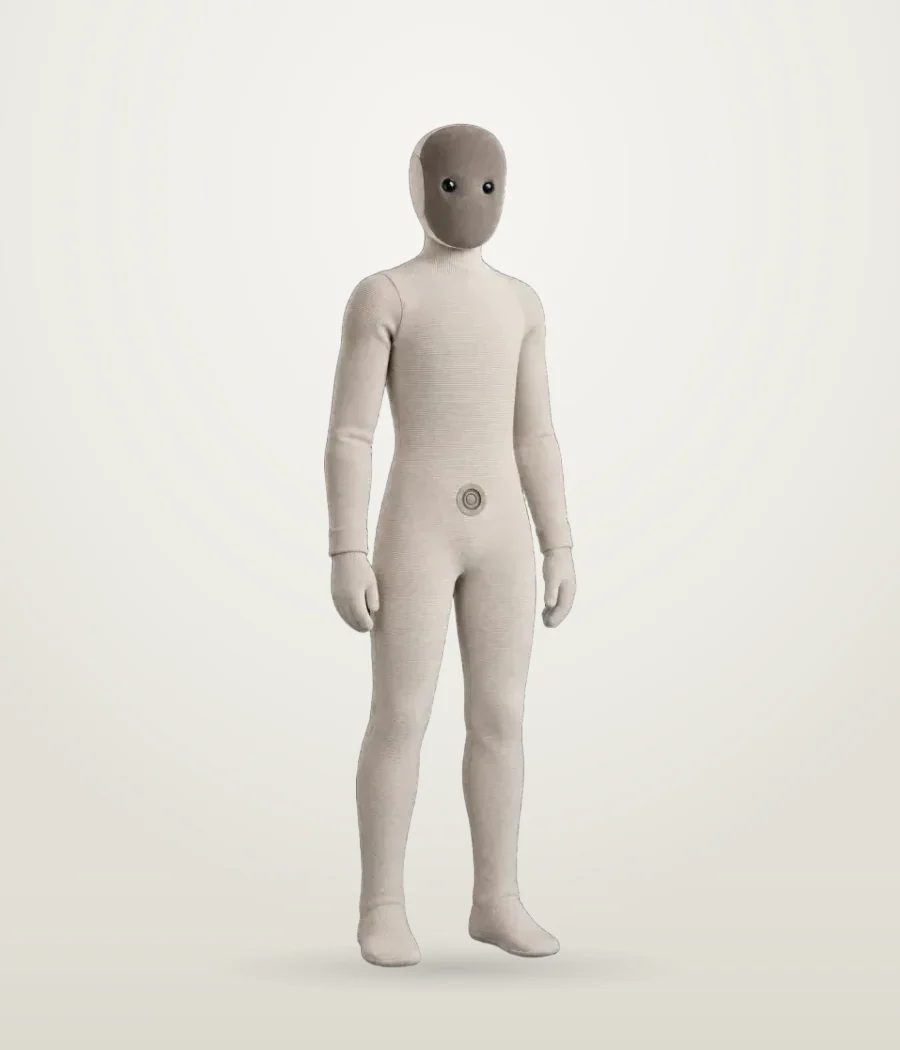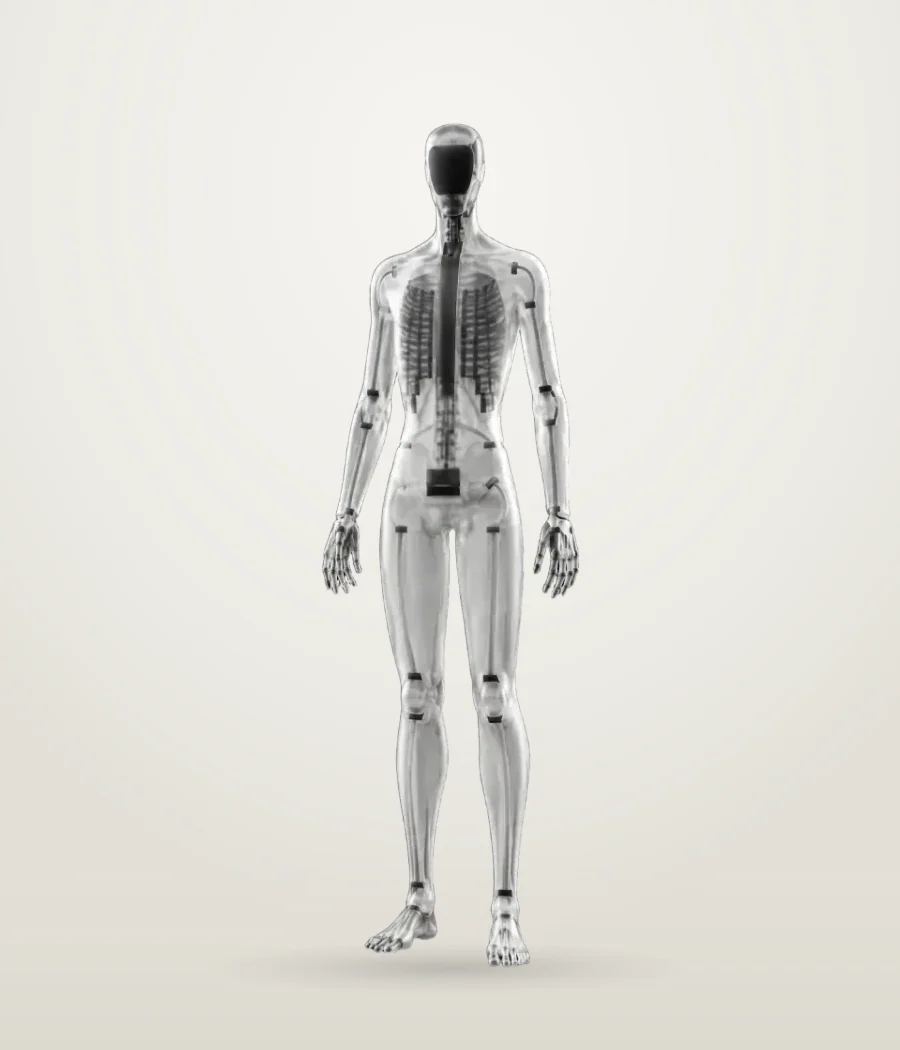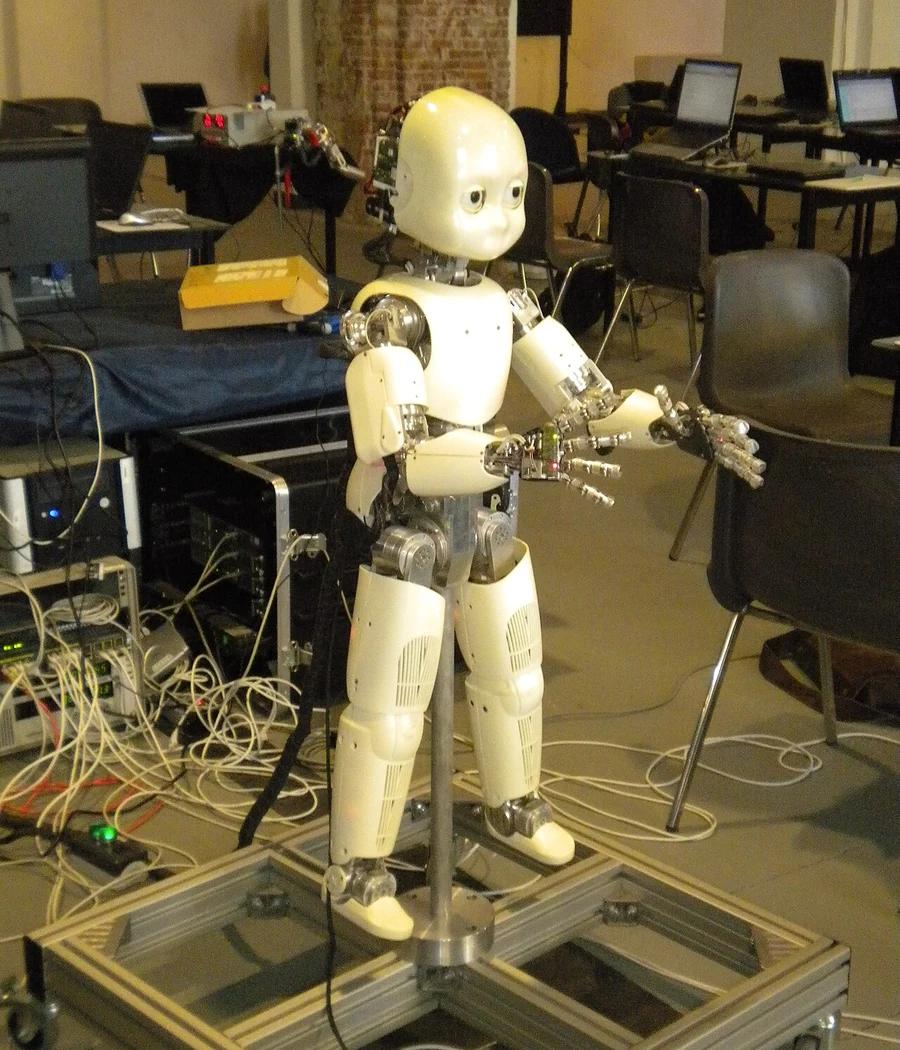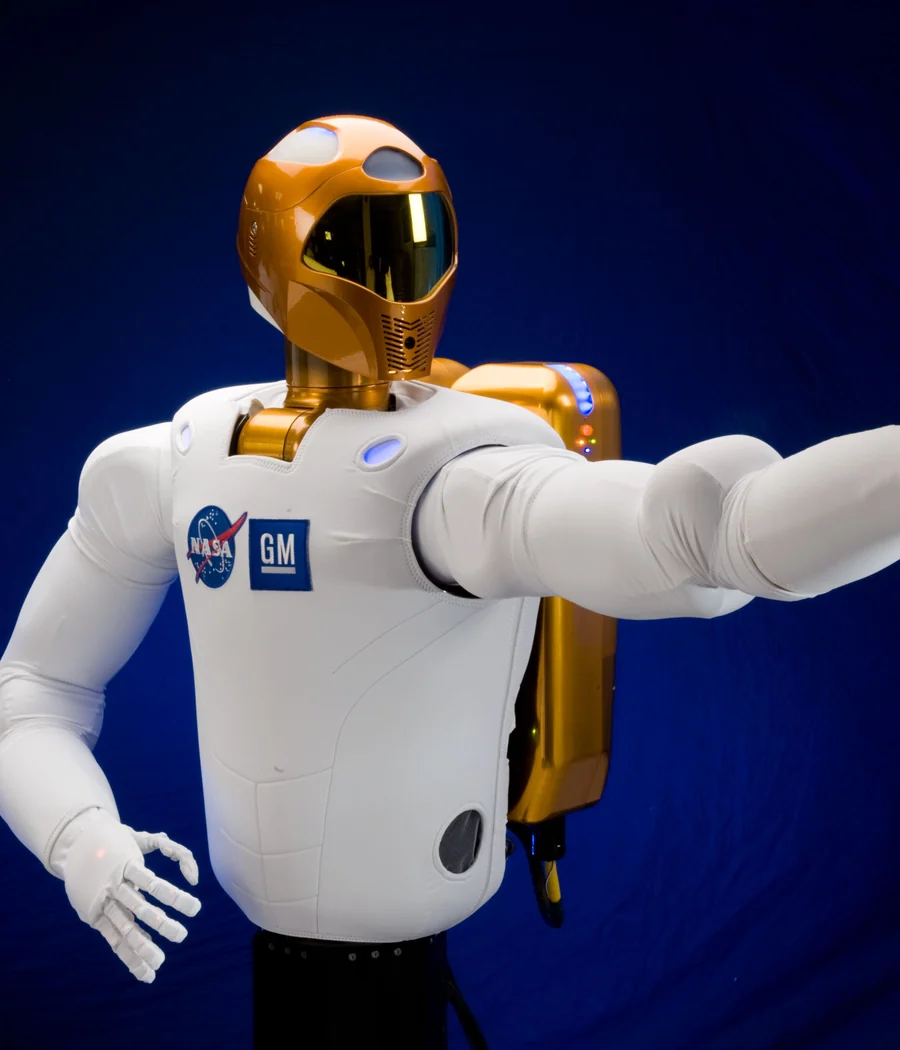
Robonaut 2 (R2)
First humanoid robot in space (ISS, STS-133)—pioneering tendon-driven dexterity and series-elastic safety.
42-DoF upper body combining Series Elastic Arm Joints (7/arm) + 12-DoF tendon-driven dexterous hands (14 DoF incl. wrist)
ISS 120V DC station power / optional mobile backpack
Radiation-hardened Space Flight Compute + 38+ embedded DSP motor controllers
Supervisory Autonomy + Force-Compliant Human-Tool Teleoperation (ROS)
Subsystem Engineering Teardown
The first humanoid robot ever flown in space (launched aboard Space Shuttle Discovery STS-133 in February 2011), pairing dual 7-DoF series-elastic arms on a humanoid torso with optional microgravity climbing legs.
Pioneered forearm-housed tendon-driven hands (12 DoF per hand + 2-DoF wrist = 14 DoF each) capable of exerting ~2.25 kg fingertip force and operating unmodified astronaut switches, handrails, and power tools.
Over 350 integrated sensors provide closed-loop force compliance so R2 can work safely shoulder-to-shoulder alongside ISS crew members and factory operators.
Engineered to NASA human-spaceflight electromagnetic, acoustic, and thermal standards for operation inside the pressurized Destiny Laboratory aboard the ISS.
Operated aboard the International Space Station (2011–2018) and seeded modern commercial humanoid engineering—including key founders of Apptronik and Dexterity.